What Meditation Techniques Are Practiced at Osho Ashrams?
by Ma Kranti
Osho meditation camp conductor since 2006
Published on:
Last updated on:
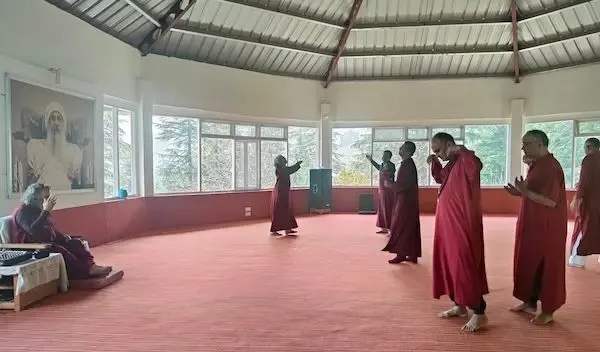
Osho ashrams in the Himalayas offer a unique collection of meditation practices designed specifically for modern minds. Unlike traditional silent meditation, these techniques incorporate movement, breath, sound, and catharsis to help you release stress before entering stillness. At Oshogram, in Himachal Pradesh, these powerful methods combine with the natural mountain environment to create transformative experiences. Whether you're completely new to meditation or deepening your existing practice, understanding these techniques helps you choose the right approach for your journey.
Understanding Osho's Approach to Active Meditation
"That is my reason why I emphasise first chaotic meditations and then silent meditations. First active meditations, then passive meditations. You can move into passivity only when all that is there like junk has been thrown out. Anger has been thrown out, greed has been thrown out... layer upon layer, these things are there. But once you have thrown them out, you can easily slip in. There is nothing to hinder." - Osho, Take It Easy
Osho developed revolutionary meditation techniques that recognise a simple truth: the modern mind is too restless for immediate stillness. His active meditations combine movement, breath, and cathartic release to help accumulated tension leave your body first. Only after this release can genuine stillness emerge naturally.
These practices differ from traditional static meditation by honouring what your body needs before asking it to sit quietly. When you suppress energy and emotion during daily life, trying to force stillness often creates more inner conflict. Active meditation provides a structured outlet for this stored tension.
The Himalayan setting at elevated locations like Oshogram enhances the effectiveness of these practices significantly. Pure mountain air, minimal urban distractions, and the powerful natural energy of ancient forests create conditions that support deeper meditation. The altitude itself brings awareness to your breath, making respiratory techniques more impactful.
Dynamic Meditation: The Foundation Practice
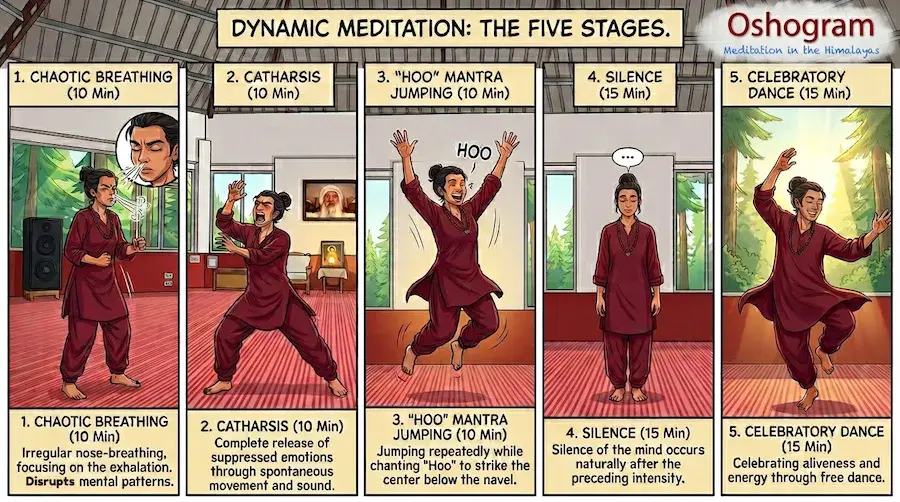
Dynamic meditation stands as the cornerstone of Osho's meditation methods. This vigorous morning technique consists of five stages spanning one hour, beginning with chaotic breathing that awakens your entire system. Many practitioners describe it as the most challenging yet most transformative practice they've encountered.
Stage one involves ten minutes of intense breathing through the nose to awaken dormant energy within your body. You breathe chaotically, without pattern, focusing entirely on the exhalation. This irregular breathing disrupts your usual mental patterns and builds energy for the following stages.
Stage two encourages complete catharsis through spontaneous movement, sound, and emotional release for ten minutes. You let your body move however it wants, making any sounds that emerge naturally. This stage allows suppressed emotions to surface and leave your system without judgment or control.
Stage three incorporates the Sufi mantra "Hoo" jumped repeatedly for ten minutes to strike the energy center below the navel. With arms raised, you jump while shouting this sound, channelising your energy. This exhausting stage pushes you beyond mental resistance.
Stages four and five bring participants into fifteen minutes of complete silence followed by fifteen minutes of celebratory dance. After the intensity of earlier stages, silence happens naturally because your mind has nothing left to say. The final dance celebrates the aliveness you feel after such a complete release. You can explore our meditation offerings to experience dynamic meditation in a supportive group setting.
Kundalini Meditation: Shaking into Stillness
Practiced during sunset hours, kundalini meditation allows the body to shake freely, releasing tension from the nervous system. This technique recognises that your body naturally wants to shake off stress when you give it permission. The four fifteen-minute stages move from shaking to dancing, then sitting in silence, and finally lying down.
In the first stage, you stand and allow your body to shake from the feet upward. You don't make the shaking happen; you let it happen to you. This subtle difference changes everything about the experience. Your body knows exactly how to release tension when your mind stops interfering.
The second stage transitions into free-form dance, allowing any remaining energy to express through movement. Many practitioners report profound relaxation and energy flow after regular practice. Some describe feeling electricity moving through their body, while others experience deep emotional releases.
The natural surroundings of cedar forests at our location in the Himalayas create an ideal acoustic environment for the accompanying music. The trees seem to absorb and amplify the vibrations, making outdoor kundalini sessions particularly powerful. Evening practice helps you release the day's accumulated stress before sleep.
Nadabrahma: The Humming Meditation
This gentle technique centers on humming and hand movements performed while sitting. For thirty minutes, you create a continuous humming sound while moving your hands in circular patterns. The vibration travels through your entire body, creating a "massage" from the inside.
Suitable for all ages and fitness levels, nadabrahma makes meditation accessible to first-time meditators who feel intimidated by more vigorous practices. The humming gives your mind something to focus on, preventing the wandering thoughts that often frustrate beginners. Your own voice becomes the anchor.
The practice creates internal vibrations that calm the mind and harmonise body systems. Regular practitioners report improved sleep, reduced anxiety, and a general sense of well-being. The humming stimulates the vagus nerve, which connects to your parasympathetic nervous system.
Often practiced in early morning or in the evening as a bridge between activity and sleep, nadabrahma helps you transition from the day's external focus to inner rest. The gentle nature of this technique makes it perfect for daily practice without requiring special physical preparation.
Vipassana: The Art of Witnessing
Rooted in Buddhist tradition, vipassana teaches practitioners to witness thoughts without attachment. This observation technique forms the foundation of mindfulness practices worldwide. At Osho ashrams, vipassana is taught with contemporary understanding, making ancient wisdom accessible to modern seekers without religious language.
The practice involves observing breath, bodily sensations, and mental patterns with equanimity. You don't try to change what you observe; you simply watch. This simple instruction proves profoundly difficult because your mind constantly wants to judge, analyse, or fix what it notices.
Extended silent retreats often incorporate intensive vipassana sessions lasting several hours. These longer sits reveal patterns in your mind that shorter sessions never expose. You begin noticing how thoughts arise, persist, and dissolve on their own when you stop feeding them attention. Preparing for your retreat helps you approach intensive vipassana practice with realistic expectations.
The cumulative effect of daily vipassana practice changes your relationship with your own mind. You start recognising thoughts as events in consciousness rather than absolute truths. This shift creates space between stimulus and response in daily life.
Nataraj: Dance as Meditation
This celebration-based technique invites participants to lose themselves completely in dance. Nataraj means "the dancing god," and this practice honours the divine through total abandon in movement. Three stages include forty minutes of dancing with closed eyes, twenty minutes lying in complete stillness, and five minutes dancing in celebration.
The instruction for the first stage is simple: dance as if possessed. You close your eyes and allow the music to move your body without choreography or self-consciousness. With closed eyes, you stop performing for others and dance purely for yourself.
The sudden transition to lying still in stage two creates a profound contrast. After wild movement, your body tingles with aliveness while remaining motionless. This combination of exhaustion and vitality often brings spontaneous meditation states without effort.
Particularly effective in releasing self-consciousness and connecting with spontaneity, nataraj helps intellectual people drop into their bodies. The open spaces surrounded by orchards at mountain ashrams provide perfect venues where you can dance freely under the sky.
How Altitude and Natural Environment Affect Practice
Practicing meditation at higher elevations offers thinner air that naturally deepens breathing. Your body automatically takes fuller breaths to compensate for reduced oxygen, making you more aware of each inhalation and exhalation. This natural heightening of breath awareness supports all meditation techniques.
The pristine Himalayan atmosphere contains fewer pollutants, allowing for clearer respiratory function during intensive breathwork. Urban air carries particulate matter that inflames respiratory passages, while mountain air remains clean. This difference becomes obvious during dynamic meditation's chaotic breathing stage.
Natural sounds of mountain winds through lush green forests serve as ambient support for meditation rather than distraction. Unlike mechanical urban noise that triggers stress responses, natural sounds help your nervous system relax. The rustling leaves and distant bird calls create a sonic environment that supports inward focus.
Reduced oxygen at altitude can initially challenge practitioners but ultimately strengthens breathing awareness. Some people experience mild altitude effects during their first days, including headaches or breathlessness. These symptoms typically resolve within 48 hours as your body adjusts, leaving you with enhanced respiratory capacity.
Integrating Multiple Techniques During Retreats
Most Osho ashrams offer a structured program that rotates different meditation techniques throughout the day. This variety prevents habituation and addresses different aspects of your being. Morning dynamic sessions energise while evening kundalini practices help settle accumulated energy from the day.
Gentler techniques like nadabrahma complement more vigorous practices, giving your body recovery time while maintaining meditative awareness. This balanced approach prevents burnout and keeps your practice sustainable over weeks or months. You learn which techniques serve different states and needs.
Extended stays allow practitioners to experience the cumulative effects of varied approaches working together. What seems chaotic during your first week reveals itself as an intelligent system by the second week. Each technique prepares you for the next, creating a progression that deepens naturally.
The spiritual community environment supports consistent practice through group energy. Meditating alone requires tremendous self-discipline, but group practice carries you forward even when motivation wanes. You can plan your visit to experience how community practice accelerates your meditation journey.
Which Technique Should Beginners Start With?
New practitioners often begin with kundalini meditation due to its natural, accessible shaking movement. The instruction to "let your body shake" feels less intimidating than dynamic meditation's intense stages. Most people can surrender to shaking more easily than to cathartic screaming or jumping.
Dynamic meditation, while intense, provides powerful breakthroughs for those willing to fully commit. If you feel stuck in your head with lots of mental activity, dynamic meditation cuts through overthinking faster than gentler approaches. The technique doesn't give your mind time to analyse or resist.
Nadabrahma offers the gentlest entry point for those with physical limitations or meditation anxiety. Sitting and humming requires no special flexibility or cardiovascular fitness. The simplicity of the technique removes barriers that prevent many people from starting a meditation practice.
Experienced facilitators at ashrams guide first-timers through proper technique and common challenges. Having someone explain what to expect during each stage reduces anxiety and helps you engage more fully. The facilitator's presence also ensures you're practicing safely and effectively.
The Role of Music in Osho Meditation Techniques
Each Osho meditation comes with specifically composed music designed to support different stages. These soundtracks weren't added as background ambience; they're integral to the technique itself. The music signals transitions between stages and provides the energetic container for your experience.
The soundscapes guide practitioners through transitions without verbal instruction. When dynamic meditation's second stage music shifts, your body knows catharsis time has ended even before your mind registers the change. This allows you to stay immersed in your experience rather than watching a clock.
Music serves as a container that allows deeper surrender into the process. The steady presence of sound gives you something external to reference when internal chaos feels overwhelming. You can let go completely because the music holds the structure.
Live music sessions occasionally enhance group meditation experiences at some ashrams. Musicians playing tabla, flute, or other instruments during certain techniques add unpredictability and freshness. The human element in live performance creates unique energy that recorded music can't replicate.
Preparing Your Body and Mind for Active Meditation
Wear loose, comfortable clothing that allows unrestricted movement during dynamic practices. Tight jeans or restrictive tops prevent the free movement these techniques require. Natural fiber fabrics breathe better during vigorous stages when you'll sweat significantly.
Maintain an empty stomach for vigorous techniques, practicing before meals when possible. Attempting dynamic meditation after eating often leads to nausea as your body diverts blood from digestion to movement. Early morning practice naturally occurs on an empty stomach.
Approach each session with willingness to be total rather than perfect in execution. These techniques don't require graceful performance; they require honest participation. Making strange sounds or moving awkwardly matters less than giving your full energy to each stage.
Release expectations about specific outcomes or experiences. Your first dynamic meditation might feel silly and pointless, then suddenly create a breakthrough during your say, the fifth session. The practice works according to its own timeline, not your preferences.
The supportive environment of fellow practitioners helps overcome initial self-consciousness. When everyone around you is jumping and shouting during dynamic meditation, your own participation feels less weird. The group field carries you beyond individual resistance.
Frequently Asked Questions
What is the difference between Osho meditations and traditional meditations?
Osho meditations incorporate active stages of movement, sound, and catharsis before stillness, while traditional meditations typically begin with sitting quietly. Osho recognised that modern minds carry too much stress to immediately access silence. His techniques release accumulated tension first, allowing natural stillness to emerge afterward. Traditional practices assume you can simply sit and quiet your mind through willpower alone.
How long does it take to learn dynamic meditation properly?
You can learn the basic structure of dynamic meditation in one session, but understanding the technique deeply takes weeks of regular practice. The first few sessions often feel awkward as you overcome self-consciousness about making sounds and moving freely. Most practitioners report significant shifts after practicing daily for two weeks. The technique reveals new depths even after years of regular practice.
Can people with physical limitations participate in active meditation techniques?
Yes, modifications exist for most techniques to accommodate physical limitations. Kundalini meditation's shaking can be done while seated if standing proves difficult. Dynamic meditation can be practiced with reduced intensity or even visualised if physical participation isn't possible. Nadabrahma and vipassana require minimal physical ability. Experienced facilitators at ashrams help adapt techniques to individual needs.
Do I need previous meditation experience to join sessions at an Osho ashram?
No previous meditation experience is necessary to participate in Osho meditation sessions. These techniques were designed for beginners and experienced practitioners alike. Facilitators provide clear instructions before each session, and the group environment supports newcomers. Many people find active meditation techniques easier to access than traditional silent practices when starting their meditation journey.
How does practicing meditation in the Himalayas differ from practicing at sea level?
The altitude at Himalayan ashrams naturally deepens your breathing and increases breath awareness. Thinner air requires your body to work slightly harder, making respiratory techniques more impactful. The pristine mountain environment eliminates urban pollution and noise, creating optimal conditions for practice. The powerful natural energy of ancient mountains amplifies meditation experiences in ways practitioners consistently report as distinct from sea-level practice.
Are Osho meditation techniques suitable for older adults?
Many Osho meditation techniques suit older adults well, particularly nadabrahma, gentle vipassana, and modified versions of other practices. Kundalini meditation's shaking can be done at whatever intensity feels comfortable. Dynamic meditation might prove too vigorous for some older practitioners, though age alone doesn't determine this. Many people in their 70s and 80s practice dynamic meditation daily. Individual health and fitness matter more than age.
What should I wear during active meditation sessions?
Wear loose, comfortable clothing made from breathable natural fabrics like cotton. Avoid tight jeans, restrictive tops, or synthetic materials that trap sweat. Layers work well since you might feel cold before practice but heat up significantly during vigorous stages. Remove jewelry that might catch or distract you. Most practitioners go barefoot or wear thin socks, as shoes restrict movement during techniques like kundalini and dynamic meditation.
About the Author
Ma Kranti
Osho Meditation Camp Conductor since 2006
With around 20 years of experience, Ma Kranti has dedicated
her life to sharing the transformative power of Osho
meditation. From the serene heights of Oshogram ashram in
the Himalayas to meditation camps across India, she continues
to guide seekers on their inward journey.